Serving Barnwell County and its neighbors since 1852

For job seekers, the search for a new role now comes with an added source of stress: determining whether an opportunity is real or an attempt to exploit their need for work. Employment scams rank among the most common types of consumer fraud, and they’re on the rise, according to the Better Business Bureau. Scammers use career boards, social media and generative AI to impersonate recruiters and promote fake openings that may appear legitimate. These scams frequently promise flexible hours and unusually high pay to lure victims into providing personal information, making up-front payments or granting access to financial accounts.
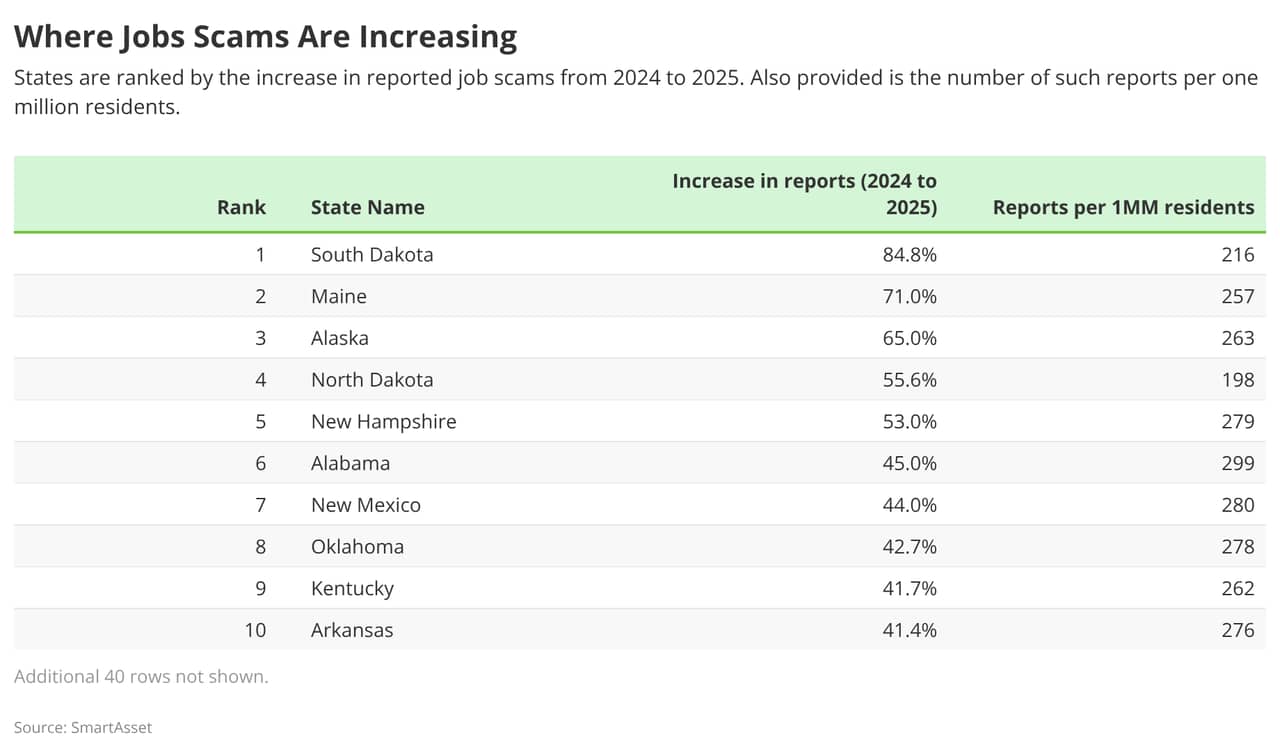
SmartAsset analyzed the two most recent years of Federal Trade Commission data categorized as job scams to identify where reports increased the most. The study also measured how common these reports were in each state.
Expert Insight
“Job seekers should always be cautious,” said Gilbert Michaud, Ph.D., assistant professor of environmental policy at the School of Environmental Sustainability at Loyola University Chicago. “Common warning signs are poorly written advertisements, recruiters who avoid video conversations, being asked to pay fees or share sensitive information, or offers that come fast and with high salaries. These types of scams have become more prevalent with hybrid and remote work.”
Michaud studies clean energy workforce development at Loyola and is a faculty affiliate at the Gerald R. Ford School of Public Policy at the University of Michigan. SmartAsset spoke with this expert to add outside perspective; he did not participate in the study’s analysis, methodology or findings.
.png)
1. South Dakota
2. Maine
3. Alaska
4. North Dakota
5. New Hampshire
6. Alabama
7. New Mexico
8. Oklahoma
9. Kentucky
10. Arkansas
This analysis examined fraud reports submitted to the Federal Trade Commission (FTC) in 2024 and 2025, the most recent years available. Reports categorized as “Job Scams and Employment Agencies” by the FTC’s Consumer Sentinel Network were aggregated by state and used for the analysis. States were ranked by reports per 1 million residents in 2025 and by the percentage increase in reports from 2024 to 2025. Because FTC data reflects reported incidents rather than all fraud, actual fraud levels may be higher, and differences in reporting behavior may affect comparisons. Source data providers are not affiliated with, and do not endorse or sponsor, this study or its findings.
This story was produced by SmartAsset and reviewed and distributed by Stacker.